18 March 2026 / Beans
What makes Balinese beans different
Highland volcanic soil, hand-picked cherries, and small-lot processing give our local beans a character you will not find in imported stock.
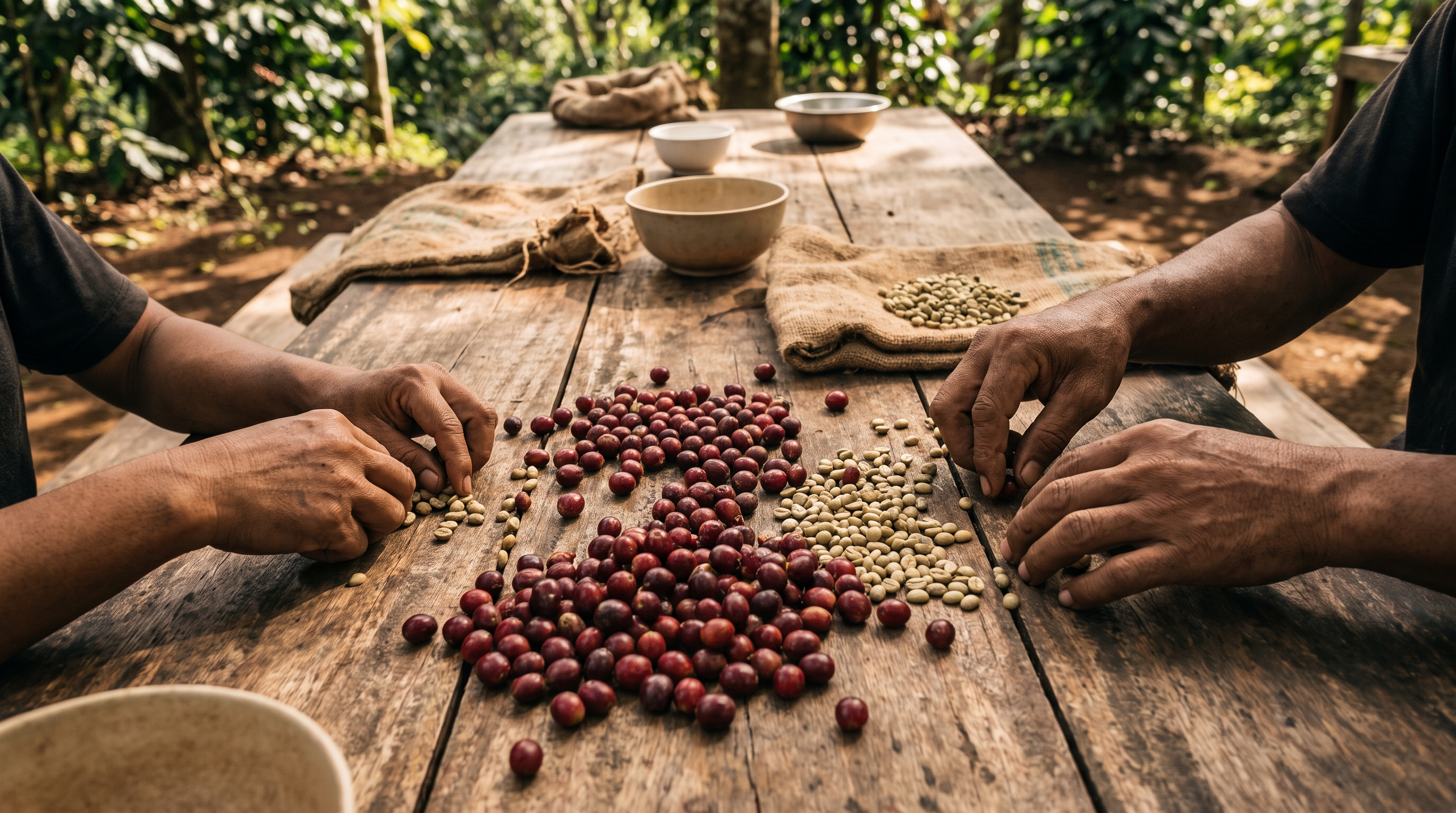
Most coffee that lands in Canggu has already travelled a long way. Balinese beans have not. They grow in highland volcanic soil a few hours from the bar, on small farms where cherries are still picked by hand.
That proximity is not a marketing line. It means a lot can leave the farm, rest, and reach our grinder while the harvest is still the story — not a note on a bag from last year.
Kintamani and the western slopes
Kintamani is the name most guests already know. Washed lots from those highlands tend to drink clean and bright — citrus, a little florals, a finish that stays light. Further west, natural lots from volcanic slopes, the kind we roast as Pupuan Reserve, are rounder: ripe fruit, more body, a sweetness that holds up in milk.
Neither is a novelty pour. They sit on the board next to Ethiopia and Sulawesi because a specialty bar should show range — and because the local coffees can change with the harvest instead of with a freight schedule.
Small lots, different cups
A farmer here is not filling a shipping container. A day’s pick might be a few sacks, processed the same afternoon. That scale is why two bags from the same village can taste unlike each other, and why we cup every arrival before it hits the menu.
If you want the difference in the cup, ask for a Balinese filter next to an imported one. The gap is not subtle.